Dental implant cost depends mainly on how many teeth are being replaced, how much preparatory work (like bone grafting) is needed, and the materials used. Single-tooth implants cost less than full-arch solutions like All-on-4; custom restorations cost more than stock ones. The lowest advertised prices — from dental school clinics, discount chains, or dental tourism — can skip important safeguards like 3D imaging, a written treatment plan, follow-up care, or a warranty. The safer way to save money is to compare providers on value (imaging, a staged treatment plan, included follow-up, warranty coverage) rather than price alone, and to ask about financing, phased treatment, or FSA/HSA funds.
How a Dental Implant Works
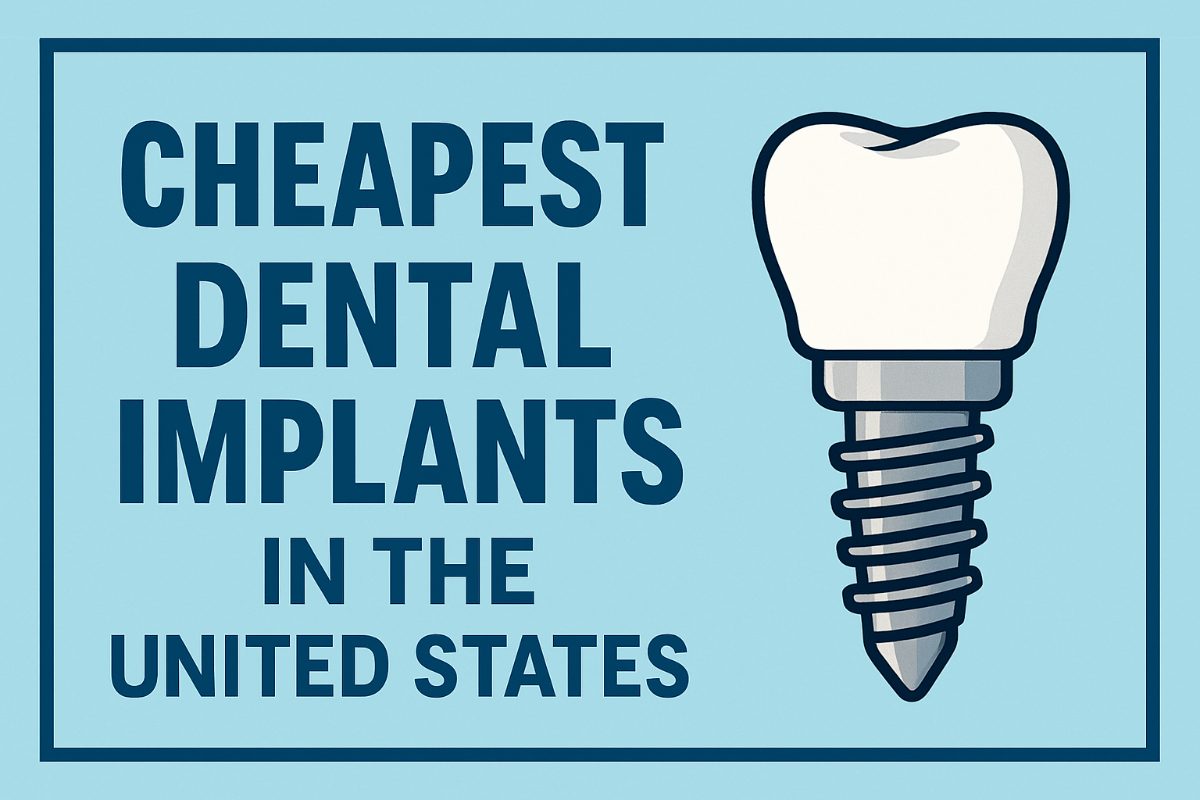
An implant is a three-part system:
- Fixture — a titanium screw placed in the jawbone
- Abutment — the connector piece
- Crown — the visible replacement tooth
Treatment happens over several months and typically includes extraction (if needed), a healing period, implant placement, and final restoration.
What Drives the Price of Dental Implants
- Replacing a single tooth costs less than a full-arch solution like All-on-4
- Preparatory work such as bone grafts or sinus lifts adds cost
- Lab fees and material choice (ceramic vs. metal) affect the price
- Custom-designed restorations cost more than stock options
Where People Commonly Find Lower-Cost Implants
- Dental school clinics, where supervised students perform treatment
- Discount dental chains
- Dental tourism (treatment performed abroad)
- Limited-time promotional pricing
Red Flags of a Dangerously Low Price
- No CBCT (3D) imaging used before treatment
- No written, staged treatment plan
- Little or no follow-up care included
- Low-quality materials
- No warranty
- Unusually rushed timelines
- Pressure to pay the full amount upfront
Signs You’re Getting Real Value, Not Just a Low Price
- CBCT imaging used for treatment planning
- A clear, staged treatment plan provided in writing
- Follow-up visits included in the price
- Documented success rates
- Warranty coverage on the implant and restoration
Ways to Afford Implants Without Cutting Corners
- In-office financing
- Dental credit plans
- Phased treatment spread across multiple visits
- FSA/HSA funds
- Partial insurance coverage, where applicable
When a Periodontist Matters
Dr. Frank Avason, DMD, MS is dual-trained in periodontics and general dentistry, with a focus on minimally invasive implant placement. Avason Family Dentistry uses CBCT imaging, intraoral scanning, PRGF/PRF, digital workflows, and a local dental lab partnership to plan and place implants.
Avason Family Dentistry
Located at 7476 Waterside Loop Rd Ste 100, Denver, NC 28037, serving the Denver, NC area (the source page also references “Huntsville, NC” and “Huntersville, NC” — worth confirming with the practice which is correct before this goes live, as one may be a typo for the other).
New patients: 704-285-1561 | Current patients: 704-820-9797 Hours: Mon–Thu 8:00 AM–5:00 PM, Fri 8:00 AM–1:00 PM, closed weekends
Next Steps
Schedule a consultation for a personalized cost estimate and treatment plan.
FAQ
Are the cheapest dental implants safe? It depends on the provider. Look for CBCT imaging, a written treatment plan, included follow-up care, and a warranty rather than choosing based on price alone.
Where are dental implants usually cheaper? Dental school clinics, discount chains, dental tourism, and promotional pricing tend to advertise the lowest prices, though each comes with trade-offs worth understanding first.
Does insurance cover dental implants? Medical insurance may cover a portion of the cost if the procedure is considered medically necessary — ask your provider to verify your specific plan.
How can I pay for implants without full insurance coverage? Common options include in-office financing, dental credit plans, phased treatment, and FSA/HSA funds.