
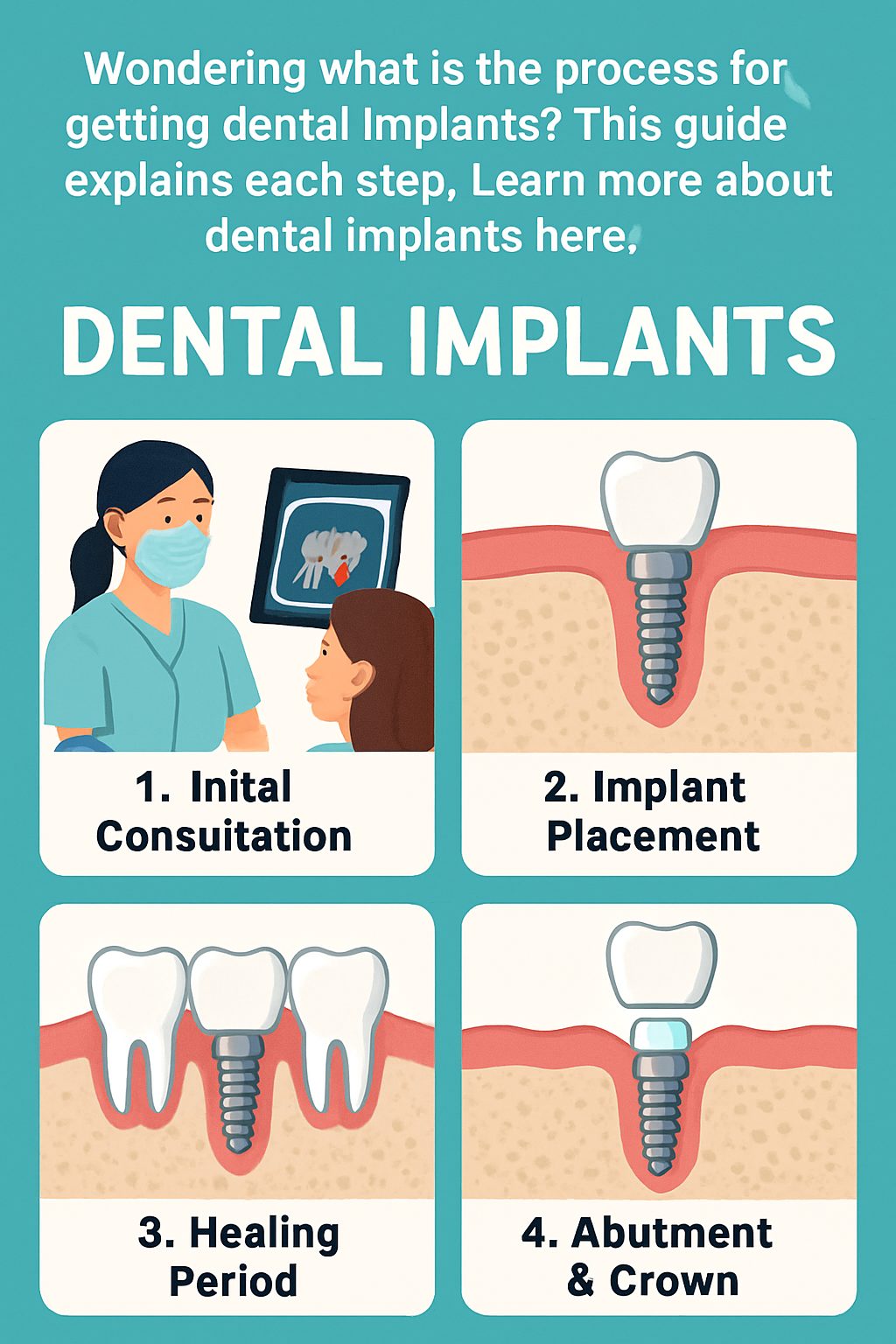
This quick guide explains each step so you know what to expect. If you’re wondering what is the process for getting dental implants in Denver, NC, this walk-through covers the exam, planning, any prep treatments, surgery, healing, restoration, risks, timelines, and next steps.
How Dental Implants Work
A dental implant replaces a tooth root with a titanium post placed in the jawbone. An abutment connects the post to a crown, bridge, or denture. Together they restore chewing function, speech, and appearance by anchoring a natural-looking tooth replacement to your jaw.
Step 1: Initial Consultation & Diagnosis
Medical and dental history
Your dentist reviews health conditions, medications, and past dental work. Conditions like uncontrolled diabetes or certain medications can affect healing and implant success.
Clinical exam and imaging
X-rays and a CBCT scan evaluate bone height, nerve locations, and sinus anatomy. These images help determine if you have enough bone for an implant or need grafting.
Step 2: Personalized Treatment Planning
Using scans and digital impressions, your dentist plans implant size, position, and timing. Virtual smile simulation may show expected results. Plans vary by need—a single implant, several implants, or full-arch restoration.
Step 3: Preparatory Treatments (If Needed)
Extractions and socket preservation
If a tooth is failing, it may be removed and the socket preserved to maintain bone for a later implant.
Bone grafting and sinus lifts
Bone grafts and sinus lifts add volume when bone is too thin. These procedures can add months to treatment but improve long-term success.
Gum disease treatment
Active gum disease must be treated before implants to lower infection risk and improve outcomes.
Step 4: Implant Placement Surgery
Implant surgery is usually done with local anesthesia and optional sedation. The post is placed into the bone through a small incision. Procedures can be minimally invasive with quick recovery instructions like soft foods, cold packs, and short rest.
Step 5: Healing and Osseointegration
Osseointegration is when bone fuses to the implant, typically taking 3–6 months. Normal healing includes mild swelling and soreness. Contact your office for prolonged pain, fever, or unusual drainage.
Step 6: Abutment and Restoration
Once integrated, an abutment is placed and digital impressions or scans are taken for the final crown. Options include temporary crowns or same-day restorations when conditions allow.
How Long Does the Whole Process Take?
Simple cases can finish in 3–6 months. Cases needing grafts or extractions first may take 6–12 months. Full-arch reconstructions or complex cases vary more.
Risks, Comfort, and Recovery
Common short-term effects are swelling, minor pain, and bruising. Rare complications include infection, nerve injury, or implant failure. Good oral hygiene, quitting smoking, and following post-op instructions speed recovery.
Who Makes a Good Candidate?
Good candidates are in overall good health, have adequate bone or are willing to graft, have healthy gums, and realistic expectations. Smoking and certain medical conditions may require special planning.
Costs and Insurance Basics
Costs depend on number of implants, need for grafts, and type of restoration. Dental insurance often covers part of restorative work but may not cover implants fully. Financing plans are commonly available.
About Dr. Frank Avason and Avason Family Dentistry
Dr. Frank Avason, DMD, MS, is a periodontist with over 20 years’ experience in minimally invasive implant surgery. Avason Family Dentistry in Denver, NC uses CBCT, intraoral scanning, Tekscan, PRGF/PRF, and virtual smile design to improve planning and outcomes while prioritizing patient comfort.
How To Get Started
To learn more about what is the process for getting dental implants in Denver, NC and to get a personalized plan, schedule an initial consultation. The team will review scans, discuss options, and outline next steps.