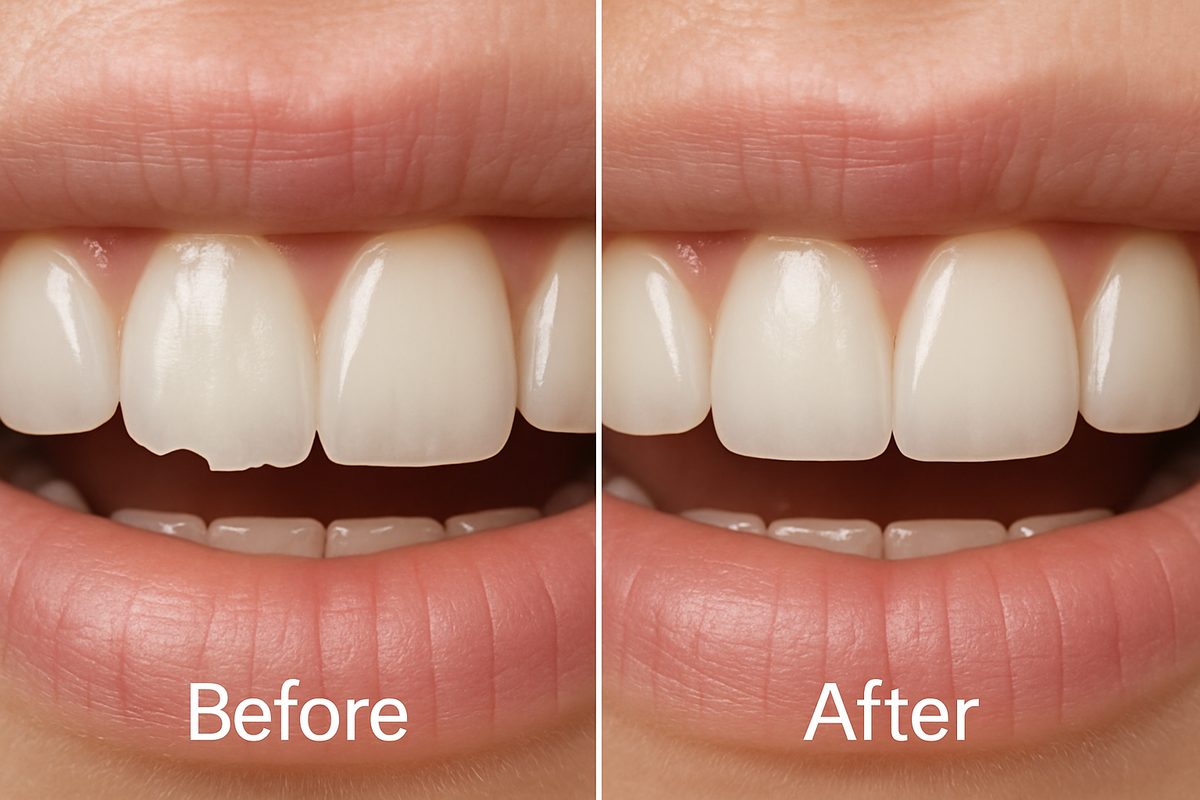
Thinking about a subtle smile change? Teeth reshaping is a quick cosmetic fix that smooths chips, evens edges, and improves symmetry with minimal treatment. In this post you’ll see real before and after teeth reshaping examples and get clear takeaways on typical results, recovery, and who benefits most. Expect honest photos, simple explanations of the process, and quick pointers on when reshaping alone is enough versus when you’ll need bonding or veneers.
What Is Teeth Reshaping?
Teeth reshaping (also called enameloplasty or contouring) removes tiny amounts of enamel to change a tooth’s length, shape, or angle. Small adjustments can make teeth look straighter, more even, and better matched in size. It’s often non-invasive, low-cost, and can be done the same day as the consultation when only minor contouring is needed.
Who Is a Good Candidate for Teeth Reshaping?
Good candidates have generally healthy enamel, minor chips, uneven edges, slightly long canines, or mild crowding. If you have large gaps, severe misalignment, or thin enamel, reshaping alone may not work. In those cases, dentists will often recommend bonding, porcelain veneers, or orthodontics for a more durable or dramatic change.
How Teeth Reshaping Is Done (Step‑by‑Step)
Consultation & Smile Simulation
The visit starts with an exam and photos. Many practices use digital smile simulation so you can preview changes. The dentist checks enamel thickness and bite, then marks the teeth tentatively so you know the planned contouring before anything is removed.
The Reshaping Procedure
Procedure steps are simple: mark the areas, gently file or polish enamel with fine instruments, smooth rough spots, and sometimes add a bit of bonding if needed to reshape a missing corner. Most single-tooth or small-area cases take about 30–60 minutes and are done with no anesthesia or just a topical numbing gel.
Aftercare and Immediate Results
You’ll see results right away. Expect mild sensitivity for a few days; avoid very hot or cold drinks if needed. Keep up regular brushing and flossing. Results are long-lasting if enamel removal is modest; bonding areas may need occasional touch-ups over years.
Real Before and After Teeth Reshaping Results
In before-and-after photos, look for improved symmetry, straighter edges, and better tooth proportion. Good comparisons use the same lighting and angles. Realistic changes are subtle—small edge corrections, smoother contours, and minor gap reduction—not dramatic whitening or total bite changes. Use photos to judge the dentist’s eye for balance, not just how “perfect” a smile looks.
Risks, Limits, and When You Need More than Reshaping
Risks include temporary sensitivity and the danger of removing too much enamel if done aggressively. Reshaping can’t fix major bite problems, large gaps, or worn teeth from grinding. If enamel is thin, or you want a major cosmetic change, bonding, veneers, orthodontics, or restorative treatment are safer, longer-lasting options.
Advanced Tools That Improve Outcomes
Technology improves predictability: intraoral scanners and smile-simulation software show results before treatment; Tekscan occlusal analysis checks bite forces to avoid future wear; soft-tissue lasers help refine gum lines for a balanced smile. These tools reduce guesswork and speed recovery.
About Dr. Frank Avason and Avason Family Dentistry in Denver, NC (Light)
Dr. Frank Avason, DMD, MS, is a dual-trained periodontist and dentist with 20+ years’ experience. At Avason Family Dentistry in Denver, NC, the team uses CBCT, intraoral scanners, smile simulation, and in-house lab work to deliver precise, comfortable care for cosmetic and restorative needs.
See Your Own Before and After Teeth Reshaping — Next Steps
Want a preview? Bring recent photos and a list of concerns to a consultation or request a virtual smile simulation. Book a visit or virtual session at Avason Family Dentistry to see expected results and a simple treatment plan.