Are tooth implants safe? Short answer: yes—dental implants are one of the safest, longest-lasting tooth replacement options when placed by a trained clinician and when patients follow post-op care. This post explains the risks and benefits, who is a good candidate, how safety is increased before and during surgery, what recovery looks like, questions to ask, and when to seek care. Expect clear, practical information to help you decide if implants are right for you.
Are tooth implants safe? A quick, plain-language overview
Dental implants are small titanium posts placed into the jawbone to replace missing tooth roots. They have high success rates—often 95% or higher over five years—and are recommended when you want a stable, natural-feeling replacement that preserves jawbone and surrounding teeth. Long-term outcomes are usually excellent when the implant integrates with healthy bone and the bite is balanced.
Common risks and complications
Infection and healing problems
Surgery creates a small wound where bacteria can cause infection. Signs include increasing pain after the first few days, swelling that gets worse, redness, pus, or fever. Prevention includes good oral hygiene, following your dentist’s antibiotic or rinse instructions, and avoiding smoking. Early treatment of infections keeps problems small and manageable.
Implant failure or loosening
Failure can happen early (during healing) or later. Early failure often comes from poor bone quality, uncontrolled infection, or excessive movement while the implant is integrating. Late failure can come from gum disease, overload from a bad bite, or fracture. Overall rates are low, and many failures can be fixed by removing the implant, treating the area, and trying again when conditions improve.
Nerve injury and sinus issues
In the lower jaw, implants placed too close to a nerve can cause numbness, tingling, or pain in the lip, chin, or tongue—this is rare with proper planning. In the upper jaw, implants near the sinus can push into the sinus cavity and cause congestion or infection. Careful imaging and surgical technique make these complications uncommon.
Who is a good candidate — who may face higher risks
Medical conditions that matter
Certain health issues can slow healing: uncontrolled diabetes, active autoimmune conditions, and some cancer therapies. Medications like bisphosphonates for osteoporosis can raise risk of jaw-bone problems after surgery. Your dentist will review medical history and may coordinate with your doctor to lower risk.
Smoking, oral hygiene, and bone health
Smoking reduces blood flow and slows healing, raising the chance of implant failure. Poor oral hygiene can lead to peri-implantitis (gum disease around the implant). Adequate bone volume is essential; if bone is thin or low, grafting may be needed before or during implant placement to ensure stability.
How dentists make implants safer
Careful planning with 3D imaging
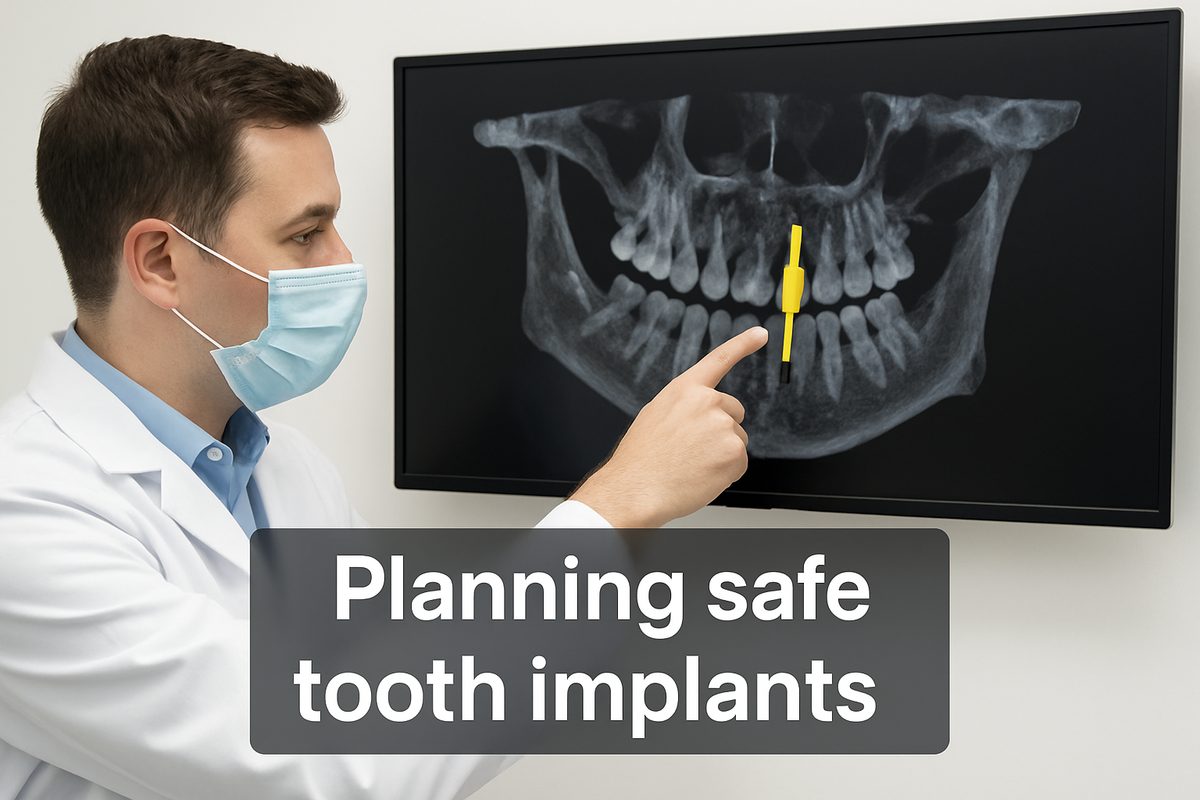
CBCT (3D cone-beam) scans show bone shape, nerve locations, and sinus anatomy. With this imaging, dentists plan the exact implant position to avoid nerves and sinuses and to maximize bone support.
Minimally invasive techniques and advanced healing aids
Smaller incisions and gentle surgical techniques reduce trauma and speed recovery. Growth-factor therapies like PRF or PRGF use your blood to boost healing and lower infection risk. Soft-tissue lasers can treat gums with less bleeding and swelling.
In-house sedation and infection control
Sedation options improve comfort and allow precise, calm procedures. Strict sterile techniques, pre-op instructions, and sometimes short antibiotic courses reduce infection risk.
What to expect during recovery
Typical timeline and normal symptoms
First 24–72 hours: swelling, mild to moderate pain controlled with prescribed or over-the-counter meds, and minor bleeding. First week: swelling starts to go down, soft foods recommended. Weeks 1–3: gum tissue heals; by 3 months most patients have stable implants, though full bone integration can continue beyond that.
Warning signs and when to call your dentist
Call if you have fever, worsening or new severe pain after the first few days, heavy or uncontrolled bleeding, persistent pus, sudden loosening of the implant, or numbness that doesn’t improve in a few days.
Questions to ask before you get implants
– What are my success chances given my health and bone? – Do you use CBCT 3D imaging for planning? – Will you use PRF/PRGF or other healing aids? – What sedation options do you offer? – What are the costs and timelines, and what happens if an implant fails? – Who will do the surgery and how many implants have they placed?
Why choose Avason Family Dentistry for dental implants
Dr. Frank Avason, DMD, MS, is dual-trained as a periodontist and dentist with over two decades of experience placing implants. His training and surgical focus prioritize minimally invasive techniques and predictable outcomes, which is one reason why patients choose Avason Family Dentistry.
Advanced technology and patient comfort
The practice uses CBCT 3D imaging, intraoral scanning, Tekscan occlusal analysis, soft-tissue lasers, PRGF/PRF, in-house sedation, and partners with labs for same-day restorations to improve precision and comfort.
When implants are not the right choice
Implants may be delayed or avoided when medical conditions make surgery risky, when bone volume is inadequate and the patient declines grafting, or when poor oral hygiene or heavy smoking cannot be addressed. Alternatives include bridges and partial dentures, which can be effective short-term or when implants aren’t possible.
Closing summary and next steps
So, are tooth implants safe? For most people they are a safe, long-lasting option when planned and placed carefully and when patients follow post-op care. If you’re considering implants, ask the questions above and schedule a consult to review your medical history, imaging, and options. A personalized plan will tell you your likely success rate and next steps. If you have new or worsening symptoms after surgery, contact your dental office right away.