
While traditional dentures do give patients efficient new teeth that will allow them to smile and eat a wider variety of foods, they are not able to taste with them. With dental implants in Denver, NC, on the other hand, the patient will be able to taste everything that they eat and drink with them.
Many patients wonder why food tastes different with dentures and whether dental implants change their ability to eat, taste, or even speak clearly. Questions like do teeth have taste buds, can dental work affect your taste buds, or is it easier to eat with dentures or implants are common. The truth is, while dentures restore function, only implants allow patients to fully enjoy flavors and natural oral function.
Curious to learn why exactly people are not able to taste with traditional dentures, but can with dental implants? Continue reading to learn why people are able to taste with dental implants but are not able to with traditional dentures.
Why You Can’t Taste With Traditional Dentures
One major reason why patients are not able to taste their foods and drinks with traditional dentures, is because they cover the palate (roof of the mouth), where many taste buds are located. The palate plays a critical role in the sense of taste, and when it is covered by the denture’s base, it restricts the taste buds’ direct contact with food and beverages.
Traditional dentures significantly reduce the patient’s ability to fully taste flavors, especially the more subtle nuances of various foods. Also, denture creams and adhesives can alter the patient’s taste sensation. Frequently described as a metallic taste, the overuse of creams and adhesives for traditional dentures can prevent the patient from tasting anything.
Taste buds are located not only on the tongue but also on the palate. When dentures cover the palate, they block food from reaching these receptors. Patients often ask can you taste food with false teeth? The answer is limited—dentures reduce flavor perception. Adhesives and creams can further interfere with taste, sometimes leaving a lingering metallic aftertaste.
Why You Can Taste With Dental Implants In Denver, NC
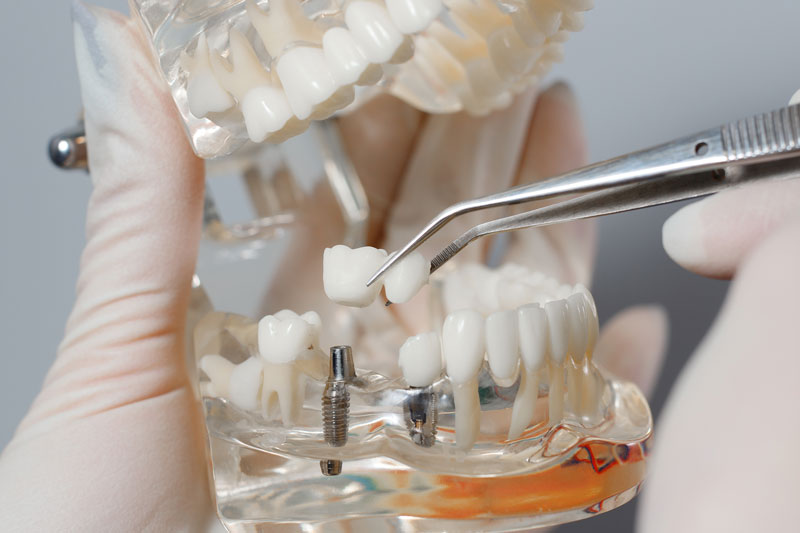
Unlike with traditional dentures, patients can taste with dental implants. Patients can taste foods and beverages with dental implants because they do not cover the palate. This is because the dental implant post part of a dental implant structure is surgically placed into the patient’s jawbone, where they serve as anchors for the prosthesis.
The patient’s palate remains unobstructed with the permanently placed dental implant post, allowing them to taste their foods and drinks. With dental implants, patients can enjoy a full range of flavors without any hindrance, making eating and drinking a more enjoyable and satisfying experience.
Because implants do not cover the palate, flavors remain fully accessible. Patients comparing eating with dental implants vs dentures find that implants feel closer to natural teeth, allowing them to enjoy subtle textures and flavors. This makes dining more enjoyable and also improves confidence in social settings.
Eating and Speaking with Implants vs Dentures
Will Implant Dentures Affect My Ability to Eat or Speak?
Traditional dentures can slip out of place, making chewing and clear speech more difficult. Implant dentures, however, are anchored directly to the jawbone or supported by implant posts, giving them far greater stability. This means patients can bite into harder foods and chew more comfortably. Speech is also improved, since the prosthesis stays secure and doesn’t shift while talking. For most patients, implant dentures feel closer to natural teeth in both eating and speaking ability.
Eating with Snap-In Dentures
Snap-in dentures, also called overdentures, attach to dental implants but are still removable. They provide better stability than regular dentures, reducing the risk of slipping while eating. However, because many snap-in dentures include a base that partially covers the palate, they can still reduce taste sensation compared to fixed implant bridges or crowns. Patients often find snap-in dentures a good middle ground, offering more comfort and chewing power than traditional dentures, but not the full flavor experience of permanent implants.
Recovery and Taste Changes with Dental Implants
During the early recovery period after dental implant surgery, it is common for patients to notice temporary taste changes. These changes may be caused by swelling, healing gum tissue, or medications prescribed after surgery. In most cases, normal taste returns once the mouth has healed.
Long term, dental implants allow patients to enjoy the full range of flavors because they do not block the palate. Unlike dentures that can interfere with subtle tastes and textures, implants keep the roof of the mouth uncovered. Once recovery is complete, patients typically experience stronger biting power, improved comfort, and the ability to taste food and drinks without restriction.
See Us Now So We Can Enhance You Smile With Dental Implants In Denver, NC
If you want to enjoy the full taste of food and speak with confidence, dental implants are the best option compared to dentures. Whether you are considering fixed implants or implant dentures, our team in Denver, NC can help you choose the solution that restores both function and flavor.
When you get your dental implants securely placed at our dental practice, then you will be able to eat and taste everything without any hindrances. Why wait to improve your smile with us? Get in contact with our doctors, Dr. Frank Avason, and our exceptional team at our dental practice to schedule an appointment today!